
- 5 Ways to Treat Severe Tooth Pain at Home
- About Us
- Abscessed Tooth: Types, Symptoms, Causes, Treatment, and Pictures
- Become a Doctor
- Bleeding Gums: Symptoms, Causes, and Treatment
- Broken Dentures; Repair, Reline, and Adjustments
- Broken Jaw: Symptoms, Causes, Treatment, and Prevention
- Communication Release Form
- Contact
- Cosmetic dentistry
- Crowns Black Friday
- Dental Avulsion – What to Do When Your Tooth Gets Knocked Out
- Dental Crown Hurts, Fell Out, Broken, or Infected
- Dental Filling Problems; Pain, Sensitive, Loose, or Falls Out
- Dental financing & insurance
- Dental History Form
- Dental Implants
- Dental Services
- Arestin Antibiotic Therapy
- Botox
- Dental bridge
- Dental check-up
- Dental cleaning
- Dental crown
- Dental filling
- Dental specialties
- Dental veneers
- Dental x-rays
- Dermal Fillers
- General Dentistry
- Night Guards
- Oral cancer screening
- Orthodontics
- Periodontal Gum Disease Treatment
- Root canal treatment
- Teeth whitening
- Tooth extractions
- Dental Trauma: Causes, Symptoms, Treatment, and Prevention
- Dentists Open Late, Saturdays, Sundays, 24 hours
- Dentures
- Dentures and Extractions
- Dentures and Implants
- Dry Socket: Symptoms, Causes, Treatment, and Prevention
- Emergency dental care
- Emergency Dental Service
- Emergency Tooth Extraction Near You
- Employment
- Endodontics
- Family Dentistry
- Find Locations
- Find Your Nearest Dentist
- Fractured Tooth (Cracked Tooth): What It Is, Symptoms, Repair, & Cost
- General Inquiry
- Home
- Implants Black Friday
- Insurance Information Form
- Invisalign
- Laser dentistry
- Locations
- Loose Teeth In Adults; Signs, Symptoms, Causes, & Treatment
- Medical History Form
- Membership
- New Patients
- Oral Cancers: Risk Factors, Diagnosis, and Treatment
- Oral Maxillofacial surgery
- Orthodontics
- Our Payment Options
- Patient Form
- Patient Resource Center
- Cavities
- Dental implants
- Frequently asked questions
- General Dentistry
- Brushing teeth
- Cavities
- Dental bonding
- Dental Care & Oral Hygiene
- Dental issues
- Dental transformation
- Flossing
- Gingivitis
- Gum disease
- How oral health impacts overall health
- Prevention and detection
- Receding gums
- Restorative dentistry
- Scaling and root planing
- Tooth decay
- What To Expect At Your First General Dentistry Appointment
- Wisdom tooth pain
- Pediatric Dental Emergency Service For Parents
- Pediatric dentistry
- Periodontics
- Preventative dentistry
- Pricing and Offers
- Cosmetic dentistry cost
- Dental Bridge Cost
- Dental checkup cost
- Dental crown cost
- Dental filling cost
- Dental implants cost
- Dental veneers cost
- Dental veneers cost
- Dentures cost
- Periodontal treatment cost
- Root canal cost
- Scaling and root planing cost
- Teeth Whitening Cost
- Tooth extraction cost
- Veneers vs crowns
- Wisdom teeth removal cost
- Privacy Policy
- Referral Program
- Restorative dentistry
- Same-day Emergency Walk-In Dentists Near You
- Schedule an Appointment
- Sedation Dentistry
- Sleep disorders
- Specials
- Test Form
- Thank You
- Thankyou for your Appointment
- Thankyou for your Appointment
- Toothaches: Causes, Remedy, Treatments, and Prevention
- Virtual Consultations

Dermal Fillers
Dermal fillers are injections that plump up wrinkles and smooth lines on your face. There are several types of dermal fillers. Healthcare providers usually inject dermal fillers in the areas around your eyes, mouth and nose. This common cosmetic procedure typically produces results right away, and can last months or years.

What are dermal fillers?
Dermal filler injections are a type of nonsurgical cosmetic procedure. Dermal fillers plump up wrinkles, smooth lines and restore volume in your face. Your healthcare provider injects these substances just under your skin.
People choose to get dermal fillers to enhance their facial features or gain a more youthful appearance. This elective treatment usually takes less than half an hour, and recovery time is minimal. Results are seen right away and last months to years depending on the type of filler and the location.
There are several kinds of dermal fillers. Your healthcare provider will discuss your options with you. As with any cosmetic procedure, there are risks, including infection, bleeding and bruising. Health insurance plans generally don’t cover elective cosmetic procedures such as filler injections.
How common are dermal fillers?
Dermal fillers are very common. Every year in the United States, more than 3 million people choose to get dermal fillers.
Treatment Details
What happens before a dermal filler procedure?
Before you get dermal fillers, you’ll have a consultation with your healthcare provider. You may wish to see a dermatologist, a healthcare provider who specializes in caring for skin. They’ll examine your face and ask about your goals and what areas you’d like to enhance.
They may mark your face with a pen or marker to show where the injections will be. They may also take pictures of your face. Your healthcare provider will recommend a specific type of filler or fillers and review possible side effects and recovery time.
During this consultation, your healthcare provider will also ask about your medical history. It’s important to tell them if you’re taking any medications, as some drugs can increase the risk of complications after getting fillers. Tell your healthcare provider if you have:
- Allergies.
- History of bruising or bleeding after similar procedures.
- Neurological problems.
- Skin conditions.
What happens during a dermal filler procedure?
You can get dermal fillers in your healthcare provider’s office. Some people choose to get dermal fillers in a medical spa (also called a medspa or medispa). This is a medical clinic that delivers cosmetic procedures in a spa-like environment. Your healthcare provider cleans your skin and may apply a lotion or cream with an anesthetic. The anesthetic numbs the area so the treatment will be more comfortable.
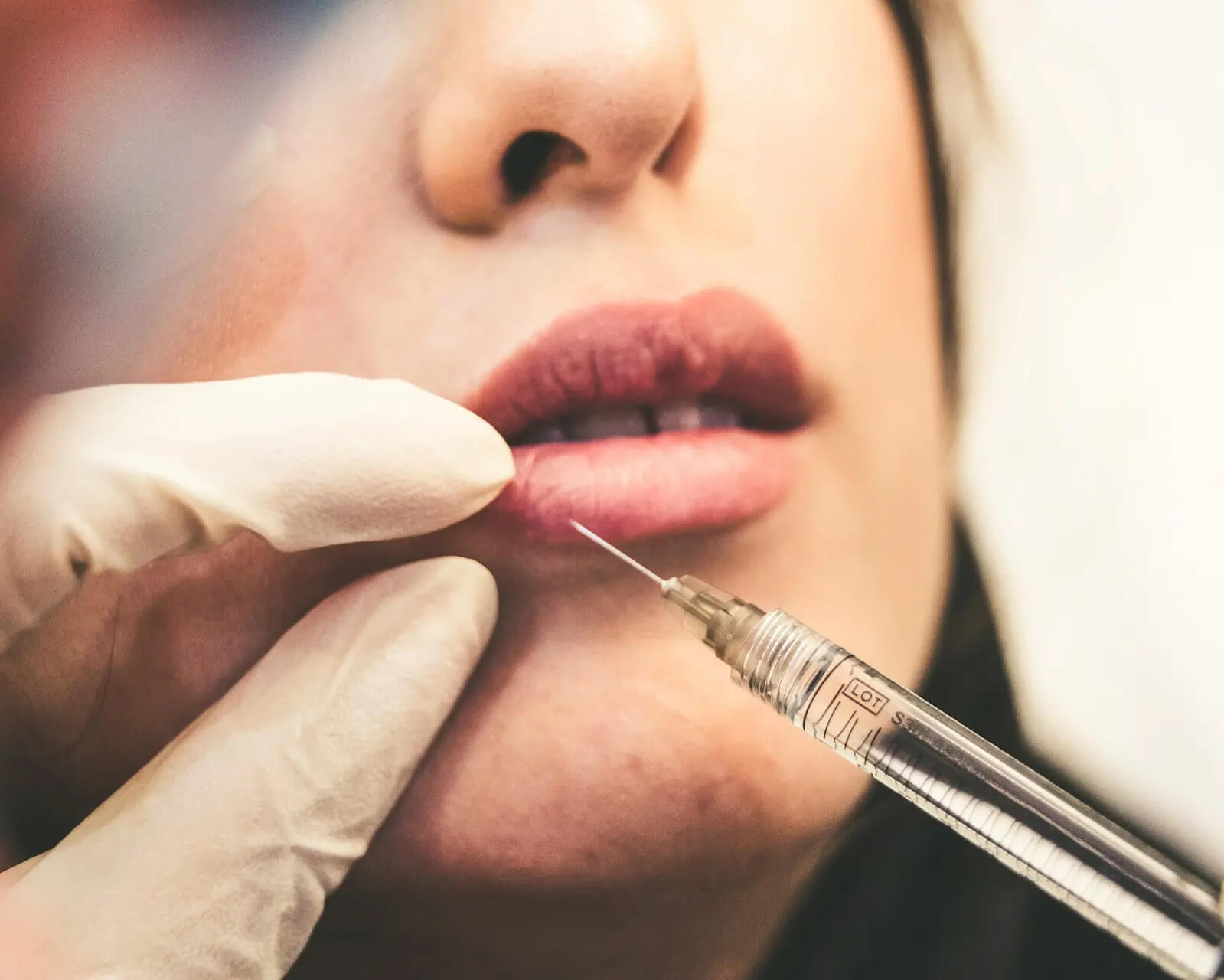
Using a thin needle, your healthcare provider injects small amounts of fillers under your skin. The needle will pinch or sting, but most people don’t experience much pain during these injections. Your healthcare provider may inject the fillers in several areas. The whole process can take a few minutes or up to an hour.
What happens after a dermal filler procedure?
After receiving dermal filler injections, your healthcare provider will cleanse your skin. They may give you an ice pack to ease pain and swelling.
You may have bruises, swelling or discomfort after getting the injections. Usually, these side effects are mild and go away in a few days.
Many people see results right away after getting these injections. But everyone’s results are different. How long it takes to see results (and how long they last) depends on several factors, including the type of treatment you received.
What’s the process for a facial fat grafting procedure?
The process for facial fat grafting is a little different. First, your healthcare provider removes fat from your own body using liposuction. After purifying the fat, they inject it into your face. This is usually an outpatient procedure (you go home the same day).
Because a fat grafting procedure requires an extra step, the process is more complicated than receiving off-the-shelf dermal fillers. Following liposuction and facial fat grafting, you may need to rest for up to two weeks. Ask your healthcare provider about the recovery time and whether this procedure is right for you.

Risks / Benefits
What are the advantages of dermal filler procedures?
Many people see results of dermal fillers right away. The injections usually take less than an hour, and you can get them right in your healthcare provider’s office. Because it’s a nonsurgical treatment, recovery time is minimal.
Depending on the type of filler, results can last months or even years. Some fillers work for more than two years. Dermal fillers are also typically less expensive than elective surgical procedures.
What are the risks or complications of dermal fillers?
Serious complications are rare, and some of these side effects are only temporary. But as with any cosmetic surgery procedure, there are risks. They include:
- Asymmetrical appearance.
- Bleeding, bruising, redness, pain and swelling.
- Damage to your skin, which can cause scars.
- Infection, which can lead to necrosis (death of the infected skin) in severe cases.
- Lumps or bumps under your skin.
- Numbness.
- Pimples that look like acne.
- Rash and itching.
Rarely, people have vision problems following dermal filler injections. If you have problems with your eyesight, along with weakness, discomfort or pain on one side of your body, get immediate medical help.
Frequently Asked Questions
How long do dermal fillers last?
The duration of dermal filler results varies depending on the type of filler used and the individual patient. Most hyaluronic acid fillers last 6-12 months, while some other types of fillers may last up to 2 years.
Are dermal filler injections painful?
Most patients experience only mild discomfort during dermal filler injections, as the treatment is performed using a fine needle and a topical anesthetic may be applied to minimize pain. Some fillers also contain a local anesthetic to further reduce discomfort.
What are the potential side effects of dermal fillers?
Common side effects of dermal fillers include mild swelling, redness, bruising, and tenderness at the injection sites. These side effects typically resolve within a few days to a week. Rare but more serious side effects may include infection, allergic reactions, or vascular occlusion, which can cause tissue damage if not treated promptly.
Why Our Patients Love Us
Dr. Patel is amazing. She saved one of my molars when I was told somewhere else it had to be pulled. She did a crown which fit perfectly. I haven’t had any issues with my crown. I often forget I had one done. She is thorough, and makes you feel so comfortable. I never liked going to the dentist but Dr. Patel makes me look forward to seeing her. I live in the south suburbs and she is worth the drive.


I had my dental appointment yesterday and it was my first most extensive consultation of my teeth ever. Yes, it’s uncomfortable meanwhile interesting to know the condition of my oral health. Dentist Reshma explained thoroughly how concerning the issue I have and the gravity of it. On the other hand, the staffs were doing great in welcoming and accommodating customers. Samantha and the other staff displays their job expertise very well.

Everyone that works in this office is very friendly and professional. I first came in after not having dental insurance for a while, and it had been years since my last dentist visit, and they did a consultation visit to see what needed to be done. They made what is normally an unpleasant experience (cavities and crowns) quick and painless.

Forever Dental on Archer is awesome! I’ve had nothing but great encounters with Dr. Patel and all support staff. I recently started treatment with Invisalign braces and the process has been very comfortable and straightforward. If you are looking for a great Dental office, I’d highly recommend Forever Dental.






My mother has been treated with so much respect here, I had to try them out. Mom was right! I love going to the dentist now, they service on time and with the upmost priority to help and care for you. Every one is friendly, patient, and helpful in terms of communicating the in’s and out’s of the insurance offering, etc. I highly recommend. They have an excellent staff. Thank you Forever Dental ?



I recently visited Forever Dental for my first appointment at the facility , and I couldn’t be more impressed! From the moment I walked in, the office staff, Yessenia and Karla were welcoming and professional, making the check-in process smooth and stress-free, which immediately put me at ease.
Dr. Dhake and the hygienist, Karla, took the time to explain everything in detail, from the x rays, exam process to the treatment plan. They were gentle, thorough, and made sure I was comfortable the entire time. I even was offered essential oils -lavender- to help calm my nerves, it helped to relax me and I will use it again next time I visit, I also appreciated how they answered all my questions without making me feel rushed. They were accommodating to my schedule and were able to fit in an X-rays, exam, cleaning and dental work-cavity treatments all in one visit.
This team made the experience of going to the dentist a pleasant one and I feel confident that I’m in great hands here (which hasn’t always been the case at other dentist offices). Now it’s time to make an appointment for my husband, he is long overdue.
If you’re looking for a skilled, caring, and professional dental team, I highly recommend Forever Dental!


Our family loves forever dental! It has been our dental home for more than a decade, serving my whole family from cleanings, whitening, and braces. The whole experience, from phone calls to check ins and the work in the back, is easy, friendly, and quick. ALL the staff are pleasant and easy to work with.
I appreciate the knowledgeable professionals that help keep our teeth healthy. Thank you so much!